




There are very few ingredients that unite India the way ghee does. From the snowy valleys of the north to the coastal kitchens of the south, from elaborate festive feasts to simple everyday meals, ghee has remained a constant presence in Indian households for centuries. While our cuisines, languages, and cooking styles differ dramatically across regions, one thing is almost always found tucked away in a kitchen cupboard—a jar of fragrant, golden ghee.
For many Indians, ghee is more than an ingredient. It is a memory. It is the aroma of rotis fresh off the griddle, the finishing touch on a bowl of steaming dal, and the richness that transforms ordinary food into something deeply comforting.
What makes ghee special?
Ghee is created by slowly heating butter until its water content evaporates and the milk solids separate from the fat. The resulting liquid is then strained, leaving behind a clear golden fat with a rich, nutty flavour and remarkable versatility.
Also read: Man from Karnataka killed in Sharjah, his body found chopped into 9 pieces; wife’s hand suspected
Unlike regular butter, ghee contains very little moisture and only trace amounts of milk solids. This gives it a longer shelf life and makes it particularly suitable for cooking at high temperatures.
The tradition of making ghee at home remains alive in many Indian families. For generations, grandmothers and mothers have transformed fresh cream collected from milk into homemade butter and eventually into ghee—a process that requires patience but rewards the cook with unmatched flavour and aroma.
A culinary staple across India
Few ingredients can claim the versatility of ghee.
It is used to temper lentils, enrich curries, flavour rice dishes, and add softness to rotis and parathas. Traditional sweets often depend on ghee for both texture and taste. Many festive recipes would simply not be the same without it.
A spoonful drizzled over hot rice, khichdi, sambhar, or dal can instantly elevate a meal. In many homes, ghee is also the preferred medium for preparing tadkas, where spices are briefly cooked to release their essential oils and aromas.
Also watch VIDEO: Bihar MP Pappu Yadav is distributing ₹500 to every adult in flood-affected areas of the state
Thanks to its high smoke point, ghee is equally useful for sautéing, roasting, and even deep-frying. It remains stable at temperatures that may cause some other fats to break down.
Ghee beyond the kitchen
Ghee occupies a unique place in Indian culture.
It is commonly used in religious ceremonies, offered in lamps during prayers, and regarded as a symbol of purity and abundance. In traditional Ayurvedic practices, ghee has long been valued as a nourishing food and is often used as a carrier for herbal preparations.
Also watch VIDEO: How the Gurgaon hit-and-run incident unfolded: Woman’s bike is deliberately hit by car

While these traditional beliefs continue to be respected, they should not be viewed as medical prescriptions. Modern healthcare decisions should always be based on professional medical advice.
Understanding the nutritional profile
The renewed popularity of ghee has sparked growing interest in its nutritional qualities. Ghee contains fat-soluble vitamins such as Vitamins A, D, E, and K. It also provides various fatty acids, including butyric acid, which researchers believe may contribute to maintaining the health of the digestive tract.
Also read: Sanjukta Parasor is first woman IPS officer to head CRPF’s CoBRA unit
Another advantage is its low lactose content. Since most milk solids are removed during the clarification process, many individuals who have mild lactose sensitivity find ghee easier to tolerate than butter.
However, it is important to remember that ghee remains a concentrated fat. Like all fats, it is calorie-dense and should be consumed mindfully.
Also read: Imran Khan is being “slowly killed” in Pakistan jail, say the ex-PM’s two sons

Ghee versus butter
Although both originate from dairy, ghee and butter differ in several important ways.
Butter contains water and milk proteins, while ghee is almost entirely milk fat. This gives ghee a higher smoke point and a richer, nuttier flavour profile. Ghee also keeps longer than butter when stored properly, making it a practical pantry staple in many households.
Also watch VIDEO: Chilling CCTV footage of Bengaluru law student Amrutha’s stabbing by her lover’s brother
For cooking methods that require sustained heat, ghee is often the preferred choice.
Myths that refuse to disappear
As interest in traditional foods has grown, so have exaggerated claims about ghee.
One of the most common misconceptions is that ghee can be consumed without limits because it is natural. While ghee certainly has nutritional value, excessive intake can still contribute to excess calorie consumption and weight gain.
Another popular belief is that ghee directly burns body fat. There is no scientific evidence supporting this claim. Sustainable weight management depends on overall dietary patterns, physical activity, sleep, and lifestyle choices rather than any single food.
Also read: Ask The Guru: Young man says he doesn’t want to marry, parents differ. What must he do?
Similarly, while ghee may support digestion as part of a balanced diet, it is not a cure for digestive disorders or chronic health conditions.
There is also a tendency to label ghee as either entirely good or entirely bad for heart health. The reality is more nuanced. Individual health conditions, cholesterol levels, family history, and overall dietary habits all influence whether and how much ghee is appropriate for a person.
How much is too much?
For most healthy adults, a modest amount of ghee can comfortably fit into a balanced diet. Nutrition experts generally emphasise moderation rather than elimination.
Also watch VIDEO: Indecent dance by young women at Ganesh Puja celebration in Bihar sparks outrage
Traditional Indian food culture may offer the best guidance here. Historically, ghee was rarely consumed in large quantities. Instead, it was used thoughtfully—as a finishing ingredient that enhanced flavour and satisfaction rather than dominating a meal.
Making ghee at home
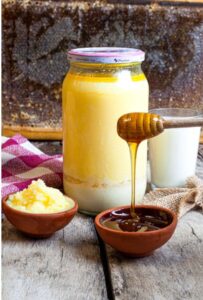
Homemade ghee can be prepared either from fresh cream or from butter.
Cream is churned until butter separates from the buttermilk. The butter is then gently simmered until the moisture evaporates and the milk solids settle and brown. The resulting golden liquid is strained and stored.
The same process can be followed using store-bought butter, making homemade ghee accessible even for busy modern households.
When stored in a clean, airtight container, ghee remains stable for several months at room temperature and can last even longer under refrigeration.
A tradition worth preserving
In an era dominated by constantly changing food trends, ghee has quietly maintained its place on Indian dining tables. It has survived not because of marketing campaigns or health fads, but because generations of people have valued its flavour, versatility, and cultural significance.
Perhaps the wisest way to view ghee is neither as a miracle food nor as something to fear. It is a traditional ingredient with genuine culinary and nutritional value—one that is best enjoyed with the same balance and moderation that Indian kitchens have practised for centuries.
A spoonful of ghee may not solve every health problem, but it certainly continues to enrich the foods, traditions, and memories that define Indian cooking.
Send your comments on this article to editor@newsdare.com.
