

Odisha government has formally turned down the remission application filed by Rabindra Kumar Pal, popularly known as Dara Singh, the man convicted for the brutal murder of Australian missionary Graham Staines and his two young sons in the eastern state in January 1999, which remains perhaps the most widely condemned attacks on a religious minority figure in India’s post-independence history.
The state government’s decision was communicated to Supreme Court of India on Thursday, September 17, ending months of uncertainty over whether the convict, now more than 26 years into his sentence, would be considered for early release.
Also read: Ayodhya Ram temple trust gets retired Air Force fighter pilot Jeetendra Mishra as CEO
Singh was originally handed the death penalty in 2003, a sentence Odisha High Court commuted to life imprisonment two years later. He first moved for release in July 2024, citing over 25 years already spent behind bars and a record of good conduct, and remains the sole convict still in custody among the thirteen men who were originally found guilty in connection with the case.
Dara Singh was found guilty of the murder of Staines, a Christian missionary who had spent years working with leprosy patients in Odisha’s tribal belt, along with Staines’ two minor sons, Philip and Timothy. The matter came up before a Supreme Court bench of Justices Manoj Misra and Vijay Bishnoi, who have been monitoring the state’s handling of Singh’s release plea for some time. On the administrative side, the decision to reject the plea was taken by Odisha’s State Sentence Review Board, which examined inputs supplied by the district administration in Keonjhar, where Singh has been lodged.
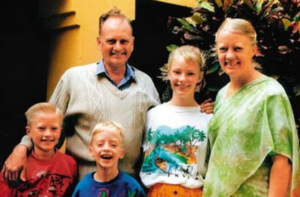
Graham Staines was born in Queensland, Australia, in 1941, and arrived in India in 1965 to take up missionary work. Over the following three decades, he devoted himself largely to the care of leprosy patients in Odisha, with his efforts concentrated in the northern Mayurbhanj district. In 1983, he married Gladys Staines, and the couple went on to have three children together, a daughter named Esther and the two sons, Philip and Timothy, who would later die alongside their father in the 1999 attack.
The basis of the proceedings is Singh’s request to the Odisha administration seeking premature release under remission provisions available to long-serving convicts. Rather than deciding this application within a reasonable period, the state government had allowed it to languish, prompting Singh to approach the apex court directly, alleging unexplained delay on the part of the authorities.
Also read and WATCH: Can’t one be a Muslim and take part in a Hindu festival? Actress Faria Abdullah answers hate with grace
During Thursday’s hearing, the state’s legal representative informed the bench that a competent authority had examined the plea and rejected it through a formal order. With that development on record, the bench permitted Singh’s counsel to alter the existing petition so that it could directly contest the rejection order rather than merely complain about delay, which was the original basis of the plea.
The remission rejection order itself was issued on August 31, and it was this order that the state’s counsel placed before the court on Thursday. The bench has now scheduled the next hearing for three weeks later, giving Singh’s legal team a window to prepare and file the amended challenge.
Also read: The power of words in an increasingly divided world has risen higher than ever before
The legal proceedings are unfolding at Supreme Court of India, even though the underlying conviction and the administrative remission process both originate in Odisha. The case has repeatedly returned to the Supreme Court’s docket because of the state government’s sluggish handling of the remission request, a delay that had earlier drawn sharp criticism from the bench.
Judges of the top court had previously expressed displeasure at the state’s failure to take a timely call on the matter, effectively leaving Singh’s plea in limbo. Thursday’s disclosure that a decision has finally been made, even if unfavourable to the convict, resolves that specific grievance about inaction, though it opens a fresh legal question over whether the rejection itself can withstand judicial scrutiny.
Also WATCH: Frightening visuals from the first day of Nepal’s devastating floods: Read the story and watch the videos
Until now, Singh’s petition before the Supreme Court was framed narrowly around the state’s failure to act, essentially a plea to compel a decision. With the order of rejection now in hand, the bench has cleared the way for the plea to be recast entirely, shifting its character from a complaint about delay to a direct legal challenge against the substance of the state’s refusal. The court’s instruction to the counsel was straightforward: obtain the order, identify the grounds for contesting it, and move the necessary amendment. This procedural pivot means the court will now examine whether the reasoning behind the Odisha government’s rejection can be justified on merit, rather than revisiting the earlier question of bureaucratic delay. The formal order passed by the bench captured this development succinctly, noting that the state had rejected the remission plea through its order of August 31, that a copy had already reached the petitioner’s counsel, and that two weeks had been sought to prepare the amendment.
For now, the case moves into a new phase. Singh’s legal team must build arguments against the specific findings that led to the rejection, while the state will likely defend its order as a considered exercise of administrative discretion. Given the case’s high public profile and its long history of scrutiny by the higher judiciary, the next hearing is expected to draw close attention, particularly on how the court weighs the gravity of the original crime against the convict’s claims of long incarceration and eligibility for remission under Odisha’s policy framework.
The bench directed Singh’s counsel to obtain the order, identify grounds to contest it, and file an appropriate amendment, with two weeks sought for that purpose. Going forward, arguments are likely to focus on whether the district administration’s account of the August 15 gathering, and the alleged sloganeering associated with it, can reasonably justify denying remission, or whether the Board’s decision amounts to an overreach shaped by localized pressure rather than an individualized assessment of Singh’s conduct and eligibility over his years in custody.
Also read: Gangster Goldy Brar says in leaked tape he got Khalistan separatist Nijjar killed in Canada in 2023
On the intervening night of January 22-23, 1999, Graham Staines was in Manoharpur village of Odisha’s Keonjhar district to attend an annual gathering of tribal Christians and, along with his sons Philip and Timothy, had settled for the night inside their station wagon parked near a local church. A mob, allegedly instigated and led by Dara Singh over accusations that Staines was forcibly converting the local tribal residents to Christianity, surrounded the vehicle and set it ablaze after dousing it with petrol. Staines and his sons reportedly woke and attempted to flee the burning wagon but were forcibly blocked by the crowd, leaving all three to perish in the flames.
Also read: Many porn videos found in phone that rape-convict ex-MP Prajwal Revanna was found using in jail
The killings drew nationwide condemnation, including from the then President of India, and global condemnation. It eventually led to a CBI investigation and a judicial commission of inquiry, culminating years later in Singh’s conviction and the life sentence he continues to serve today.