


Every four years, something extraordinary happens in India.
A nation obsessed with cricket quietly rearranges its nights for football.
Dinner is served early. Alarm clocks are set for 1:30 a.m. Office-goers promise themselves, “Just one match.” Families gather around television screens while children negotiate with parents for “just this one late night.” WhatsApp groups come alive, cafés extend screenings, and living rooms become miniature stadiums.
The FIFA World Cup does something few events can, it turns time zones into shared emotions.
India may not have qualified for the tournament, but anyone watching the World Cup knows that football lives here with remarkable intensity.
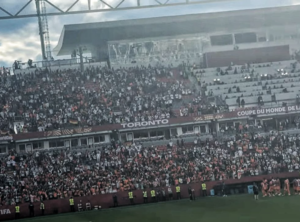
More Than a Tournament
For millions of Indians, the World Cup isn’t merely about goals and trophies. It is about belonging to something larger than geography.
The streets fill with Argentine blue-and-white flags, Brazilian yellow jerseys, Portuguese scarves, German banners, and French chants. Entire neighbourhoods choose sides long before the opening whistle. Friendly rivalries stretch across generations. One family cheers for Brazil because a grandfather once admired Pelé. Another swears eternal loyalty to Argentina because a father fell in love with Diego Maradona’s magic.
Football fandom in India is often inherited like a family heirloom.
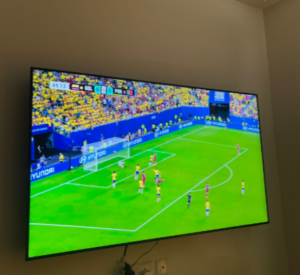 Nowhere is this devotion more visible than in West Bengal, Kerala, Goa, and parts of the Northeast, where football has long been woven into everyday life. Yet today, the passion extends far beyond these traditional strongholds. Cities and small towns alike embrace the spectacle, proving that football has quietly become a national celebration.
The Messi Phenomenon
If there is one player who transcends football itself, it is Lionel Messi.
For an entire generation, Messi represents more than extraordinary skill. He represents perseverance, humility, loyalty, and the belief that greatness need not be loud. People have watched him grow from a shy teenager into one of the greatest athletes the sport has ever known. His journey—from repeated heartbreak with Argentina to finally lifting the World Cup—felt deeply personal to millions who had never met him. In India, Messi isn’t merely admired. He is loved.
That affection was impossible to miss during his visit to Kolkata in 2011. Long before he arrived, excitement had swept across the city. Fans waited for hours outside hotels. Roads overflowed with people hoping for a fleeting glimpse. Many travelled from neighbouring states with no guarantee of seeing him. Tickets vanished within hours, and those fortunate enough to witness him at Salt Lake Stadium still recount the experience as if it happened yesterday. t wasn’t simply a football match. It was history unfolding before their eyes.
Why Football Feels Different
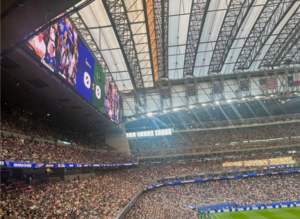
Perhaps football touches something deeply human because it asks so little to begin.A ball. A patch of ground. A few friends.
From narrow alleys to village fields, children across India have spent evenings imagining themselves as Messi, Neymar, Ronaldo, Mbappé or Salah. The dreams are free, even when the stadiums are far away.
The World Cup reminds us that sport is one of the few languages requiring no translation. One brilliant pass. One impossible save. One last-minute goal. The whole world understands.
The Midnight Ritual
This year’s tournament has once again transformed Indian households.
Sleep schedules have surrendered to overseas kick-off times. Coffee replaces bedtime. Parents pretend not to notice children watching beneath blankets. Social media erupts within seconds of every dramatic goal, controversial referee decision, or unforgettable celebration.
Morning conversations begin not with “Good morning,” but with “Did you watch that match?”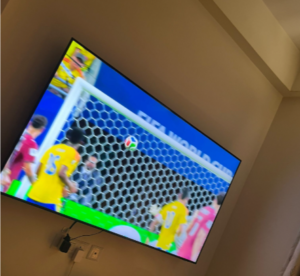
Productivity may dip for a month. National excitement certainly doesn’t.
Beyond Winning

Perhaps the most beautiful thing about FIFA fever in India is that it asks for nothing in return.
There is no national team carrying our hopes. No medal awaiting us. No trophy coming home.
Yet millions celebrate every breathtaking goal, every upset, every underdog story, and every magical moment as though it belonged to them. Because, in a way, it does.
For one month, geography fades. Languages blur. Continents disappear. The world gathers around one game, one screen, one shared heartbeat. And somewhere in an Indian home, well past midnight, someone whispers after another spectacular goal—“Sleep can wait.”