


For decades, conversations about gender equality in India have focused on getting more girls into schools and colleges. The latest All India Survey on Higher Education (AISHE) 2023–24, released by the Ministry of Education, suggests that those efforts are yielding measurable results. Women have now consolidated their lead over men in higher education participation, with the Female Gross Enrolment Ratio (GER) rising to 31.2%, compared with 28.9% for men. The GER measures the percentage of the eligible 18–23 age group enrolled in higher education, making it one of the most significant indicators of educational access.
The numbers reflect a sustained upward trend rather than a one-time achievement. Female GER has increased from 28.5% in 2021–22 to 30.2% in 2022–23, before reaching 31.2% in 2023–24. During the same period, male GER rose more modestly from 28.3% to 28.9%. This marks the seventh consecutive year in which women have recorded a higher enrolment ratio than men, highlighting a steady shift in educational participation across India.
The growth is equally evident in absolute enrolment. Women now make up 2.2 crore of the country’s 4.5 crore students in higher education, accounting for 49.7% of the total student population. Female enrolment has climbed from 2 crore students in 2021–22 to 2.1 crore in 2022–23, before reaching 2.2 crore in 2023–24. In just two years, nearly 17 lakh additional women entered colleges and universities. Significantly, overall higher education enrolment also increased by around 17 lakh students during the same period, meaning women contributed almost the entire net expansion in enrolment. The figures underscore that India’s recent growth in higher education has been driven overwhelmingly by young women choosing to pursue university education.
This progress extends beyond enrolment percentages. Women today account for a slightly larger share of students in colleges and universities than men. Across undergraduate, postgraduate and doctoral programmes, they are pursuing degrees in fields ranging from medicine and law to commerce, humanities and the sciences. The steady rise reflects changing family aspirations, improved educational infrastructure, government initiatives, and greater awareness of the long-term value of investing in daughters’ education.
Yet, beneath these encouraging figures lies an important reality.
Education is only one part of the equation. The professional world, particularly the technology sector, continues to tell a different story. Despite earning degrees in increasing numbers, women remain significantly underrepresented in engineering, information technology, artificial intelligence, software development and other STEM-related careers. While women dominate overall higher education enrolment, their representation in technical education and leadership positions remains considerably lower.
Several factors contribute to this disconnect. Social expectations still place a disproportionate share of caregiving and household responsibilities on women. Many professionals encounter career interruptions due to family commitments, while others face limited mentorship opportunities, unconscious workplace bias, unequal access to leadership roles and organisational cultures that make long-term career progression challenging.
The issue is not one of capability. Women have repeatedly demonstrated academic excellence across disciplines. The challenge lies in ensuring that professional opportunities evolve at the same pace as educational achievement.
Industry leaders, educational institutions and policymakers all have an important role to play. Colleges must strengthen career counselling, industry partnerships, internships and mentorship programmes that encourage more women to pursue careers in science and technology. Employers, meanwhile, need to invest in inclusive hiring, flexible work policies, leadership development and equitable promotion practices. Families also have a vital role in supporting daughters beyond graduation, enabling them to build sustainable careers.
Encouraging more girls to choose science, technology, engineering and mathematics from an early age can further narrow the gender gap. Exposure to successful women scientists, engineers, entrepreneurs and innovators can inspire the next generation to envision careers beyond traditional expectations.
This disparity is not merely a gender issue—it is an economic one. Numerous national and international studies have shown that increasing women’s participation in the workforce could significantly strengthen India’s economic growth, productivity and global competitiveness. As India positions itself as a global hub for innovation, digital technology and advanced manufacturing, it cannot afford to leave a large segment of its educated talent underutilised.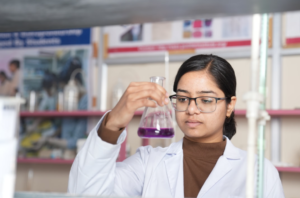
The progress in higher education is certainly worth celebrating. It reflects determination, changing social attitudes and years of investment in expanding educational access. But true gender equality will be measured not only by the number of women receiving degrees, but also by how many go on to lead research laboratories, technology companies, boardrooms and innovation hubs. This progress is not confined to enrolment ratios alone. With women now representing nearly half (49.7%) of all students in higher education, India’s campuses are becoming increasingly gender-balanced. Their growing participation spans undergraduate, postgraduate and doctoral programmes, reflecting not only improved access but also rising aspirations among young women and stronger family support for higher education.
The classrooms have already changed. The next challenge is ensuring that workplaces evolve just as quickly. India has demonstrated that it can educate its daughters. The task ahead is to ensure they have equal opportunities to innovate, lead and shape the nation’s future.