


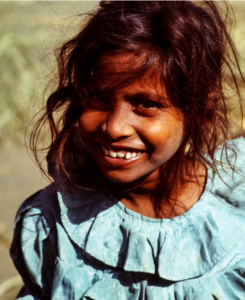
 Every missing woman or child leaves behind a family trapped in endless uncertainty. Behind every police report is an empty chair at the dinner table, an unanswered phone call, and loved ones waiting for footsteps that may never return. Missing persons are often reduced to statistics, but every number represents a life interrupted, a dream deferred, and a family forever changed.
India’s missing women and children crisis demands far greater public attention. According to National Crime Records Bureau (NCRB) data compiled between 2015 and 2024, more than 42.6 lakh women and girl children have been reported missing across the country. While many are eventually traced, tens of thousands remain unaccounted for every year, making this one of the country’s most pressing social concerns.
The decade-long data paints a troubling picture. In 2015, approximately 3.63 lakh women and girls were reported missing. The numbers gradually climbed, crossing 4 lakh in 2018 and 2019. Although 2020 saw a slight decline during the pandemic, reports rose sharply thereafter, reaching 4.85 lakh in 2022, over 5.02 lakh in 2023, and approximately 4.64 lakh in 2024.
The combined figures reveal that during this period, India recorded approximately 35.88 lakh missing adult women and 4.26 lakh missing girls below the age of 18, bringing the total to 42,61,208 missing females over ten years. 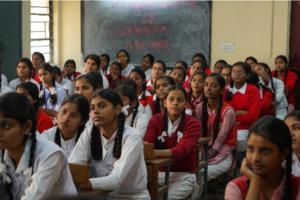
Perhaps one of the most alarming realities concerns children. More than 71% of missing children are girls, while boys account for the remaining 29%. Although authorities successfully trace or recover nearly 60–70% of missing individuals, thousands continue to remain missing every year, leaving countless families searching for answers.
Contrary to popular belief, a missing person does not always indicate kidnapping or human trafficking. The reasons are often complex and varied. Cases may involve runaways, family disputes, domestic violence, elopement, migration, mental illness, lost children, online grooming, cybercrime, poverty, lack of educational opportunities, forced marriage, natural disasters, accidents, or human trafficking and exploitation. Each case carries its own circumstances and requires sensitive, timely investigation.
Geographically, the highest number of reported missing women and girls between 2019 and 2021 came from Madhya Pradesh, followed closely by West Bengal, Maharashtra, Odisha, Delhi, Rajasthan, Uttar Pradesh, and Bihar. These figures underline the need for stronger state-level coordination and preventive measures.
Experts consistently point to several challenges that hamper investigations. Delayed reporting, limited public awareness, weak inter-state coordination, organised trafficking networks, inadequate digital identity records, slow investigations in some regions, and insufficient rehabilitation support for recovered victims all contribute to the problem.
The way forward requires a collective national response. Stronger law enforcement, improved CCTV coverage, facial recognition technology, AI-driven tracking systems, real-time data sharing, anti-trafficking operations, community participation, school awareness programmes, family counselling, faster investigations, and comprehensive victim rehabilitation must become priorities rather than aspirations.
India also has a strong legal framework designed to protect women and children, including provisions under the Indian Penal Code, the POCSO Act, 2012, the Juvenile Justice Act, 2015, the Immoral Traffic (Prevention) Act, the Information Technology Act, and the Protection of Women from Domestic Violence Act. However, laws are only as effective as their implementation and public awareness.
If you witness suspicious activity or believe someone may be at risk, act immediately. Report concerns through National Emergency: 112, Women Helpline: 181, or Child Helpline: 1098. A timely report can save a life.
Because a nation is truly strong only when every girl is safe, every woman is secure, and every family is protected. Every missing person deserves not just to be counted—but to be found.