




Among the many symbols woven into India’s cultural and spiritual traditions, few are as instantly recognisable as the small red mark adorning the forehead. Known as kumkum, this vibrant crimson powder is far more than a cosmetic accessory. It is a centuries-old emblem of devotion, prosperity, feminine energy, and cultural identity that continues to bridge ancient customs with modern life.
Whether seen during temple rituals, weddings, festivals, or everyday prayers, kumkum remains deeply rooted in Indian society. Despite changing lifestyles and fashion trends, its significance has endured across generations.
Also read & WATCH: Delhi building collapse toll 7; HC says municipal corporation and Delhi University responsible for tragedy

Kumkum is more than a red dot. It is a sacred red powder traditionally applied to the forehead, particularly between the eyebrows. This location is regarded in yogic philosophy as the Ajna Chakra, often called the “third eye,” symbolising awareness, wisdom, and inner perception. Many Hindus apply kumkum after prayers as an expression of faith and spiritual mindfulness. While the familiar forehead mark is commonly referred to as a bindi, the substance used to create it has traditionally been kumkum. Today, decorative adhesive bindis are popular, but natural kumkum continues to hold special importance in religious ceremonies and traditional households.
Historically, kumkum was prepared using natural ingredients rather than synthetic dyes. The classic method involves mixing finely ground turmeric with a small quantity of slaked lime. Through a natural chemical reaction, the yellow turmeric gradually transforms into a rich red powder.
Some traditional recipes also include natural fragrances such as sandalwood or rose essence, making the powder pleasant to use during worship. In many Indian families, especially in the southern states, preparing kumkum at home was once considered an auspicious activity, particularly before important festivals or religious occasions.
There is a rich symbolism behind kumkum and it extends well beyond appearance. In Hindu philosophy, the colour red represents vitality, strength, prosperity, and the creative energy known as Shakti, the divine feminine force believed to sustain the universe. Applying kumkum is therefore regarded as invoking blessings, protection, and positive energy. For married Hindu women, the red mark has traditionally symbolised marital harmony and auspiciousness. During ceremonies and festivals, women often exchange turmeric and kumkum as gestures of goodwill, friendship, and mutual blessings.
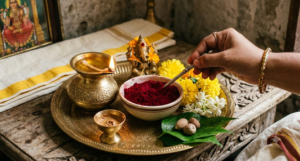
Kumkum is also an essential part of worship in India. Few Hindu rituals are complete without kumkum. It is offered to deities during daily worship, placed on sacred objects, and applied to devotees as a mark of blessing. Priests frequently place a small dot of kumkum on worshippers’ foreheads after prayers, signifying divine grace and protection.It also plays an important role during festivals such as Navratri, Diwali, Raksha Bandhan, Ganesh Chaturthi, Durga Puja, and numerous regional celebrations. Homes often display sacred symbols like Om, Swastika, or decorative motifs drawn with kumkum during religious ceremonies to welcome prosperity and positive energy.
Also WATCH: 60-year-old woman trapped in house toppled by flood in Nepal rescued after 11 days
Although kumkum is recognised throughout the country, its application varies from region to region. In many parts of North India, it is closely associated with sindoor, the vermilion traditionally applied in the hair parting by married women. Forehead markings are often made during religious ceremonies and festive occasions. In South India, women commonly wear a round red dot made from kumkum every day, regardless of whether they choose decorative bindis. After visiting temples, devotees frequently receive a pinch of kumkum as prasadam, carrying home what is considered a sacred blessing. These regional variations reflect India’s remarkable cultural diversity while sharing a common thread of devotion.
There is a very close association of kumkum with Ayurveda. Ancient Indian wellness traditions also attach significance to the application of kumkum. According to yogic philosophy, the point between the eyebrows represents the Ajna Chakra, associated with concentration, intuition, and mental clarity. Applying kumkum to this area is believed to encourage focus during meditation and prayer. Turmeric itself has long been valued in Ayurveda for its beneficial properties. Traditionally prepared kumkum made from natural ingredients is generally preferred over products containing artificial colours or heavy metals, particularly when applied regularly to the skin. While these traditional beliefs remain culturally significant, modern scientific evidence supporting specific spiritual or health effects is still limited.
Many are choosing natural kumkum today. As consumer awareness grows, many families are returning to organically prepared kumkum. Experts recommend selecting products made with natural ingredients and avoiding powders containing synthetic pigments or potentially harmful chemicals. High-quality kumkum is typically softer in colour and texture than brightly coloured commercial alternatives. For daily religious use, purity is often considered just as important as appearance.
Modern India has found new ways to embrace this ancient tradition. Fashion designers have incorporated the classic red bindi into contemporary clothing collections, while younger generations often wear minimalist bindis during cultural celebrations or festive occasions. Social media has also introduced traditional symbols to global audiences, helping many rediscover their cultural roots. For Indians living abroad, kumkum continues to play a vital role during temple visits, weddings, naming ceremonies, and festivals. It offers a tangible connection to heritage, preserving customs across continents and generations.
Also read: Ayodhya Ram temple trust gets retired Air Force fighter pilot Jeetendra Mishra as CEO
In an era of rapidly changing lifestyles, kumkum remains one of India’s most enduring cultural symbols. Its significance extends beyond religion. It represents continuity, identity, family traditions, and respect for ancient customs that continue to find relevance in modern society. Whether carefully applied before morning prayers, exchanged between women during festive gatherings, or offered in temples across the world, this simple crimson powder continues to remind millions of a tradition rooted in faith, community, and cultural pride. Sometimes, the smallest symbols carry the deepest meanings.
Send your comments on this article to editor@newsdare.com.
