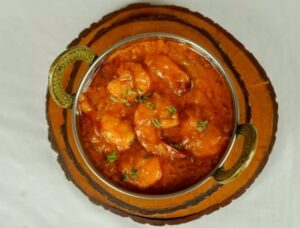



I have often wondered whether a longing for fish is written somewhere into the Bengali soul. Perhaps it is. Or perhaps it is simply because fish accompanies every important memory we carry.
I grew up in a Bengali household where fish was never merely food. It was tradition, celebration, comfort, and sometimes even medicine for a wounded heart. Long before I understood culture or identity, I understood the excitement that spread through the house when fresh fish arrived from the market.
My mother, who hailed from Khulna before the Partition of India, carried an entire world of memories in those fish. Every variety seemed to unlock a different story from her childhood. When Koi fish arrived in the kitchen, she would inevitably begin reminiscing about her girlhood in Khulna—the ponds, the monsoon waters, the simple meals that nourished large families and the rhythms of a life left behind by history. As she spoke, she would prepare Koi the way she had learned long ago, with a distinctive masala of ginger and mouri (fennel seeds), a combination that filled the house with an aroma unlike any other. Today, whenever I cook Koi fish, I still use that same precious blend. The recipe has become more than a method of cooking; it is an inheritance. With every spoonful, I feel connected not only to my mother, but also to a homeland she carried in her memories for the rest of her life.
The kitchen would come alive. Mustard oil would hiss in the pan. Turmeric would stain fingers yellow. The aroma of frying fish would drift through every room, making patience impossible.
For Bengalis, fish is not just something we eat. Fish is something we discuss. It is maybe something we even dream of.
We compare hilsa from one river to another. We debate whether the head should go into the dal or the cabbage. We argue over recipes passed down through generations. We mourn the disappearance of certain varieties from local markets. We proudly introduce our favourite fish dishes to friends from other communities.
Even after all these years, I can identify a Bengali gathering by the conversations around fish.
There is always someone reminiscing about the perfect Ilish Bhapa. Someone else insisting that Chingri Malai Curry is unmatched. Another declaring that no feast is complete without Rui Kalia.
The arguments never end. Neither does the affection.
The fish that perhaps occupies the highest throne in Bengali cuisine is Hilsa, or Ilish.
Mention the word “Ilish” in a room full of Bengalis and watch eyes light up.There are few foods capable of inspiring such devotion.
Steamed with mustard as Ilish Bhapa, cooked in a rich mustard gravy as Shorshe Ilish, or simply fried and served with steaming rice, hilsa has an almost mythical status. Every Bengali family has its own preferred method of cooking it, and every Bengali believes theirs is the best.
Yet our love affair extends far beyond hilsa.
Rui, Katla, Bhetki, Pabda, Parshe, Tangra, Mourala, Koi, Magur and Chingri each have their own loyal followers.
A Sunday lunch might feature a delicate Rui Macher Jhol, light and comforting enough to make one forget the week’s worries.
A special occasion may call for Bhetki Paturi, fish wrapped in banana leaves with mustard paste and steamed until fragrant.
A family celebration often demands Chingri Malai Curry, where prawns luxuriate in creamy coconut gravy.
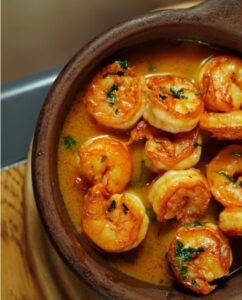
And then there was Magur Machh, the fish that occupied a category all its own in the Bengali family pharmacy. When my sister and I were recovering from chickenpox as teenagers, my parents were convinced that the surest path back to health lay not in medicines but in a daily bowl of Magur Machher Jhol. The fish would arrive alive and be carefully housed in an earthen pot, covered just enough to keep it secure but not so tightly that it could not breathe. The reasoning, accepted without question in our household, was that a magur fish that had lost its life had also lost its healing powers. Looking back, I am not entirely sure what science would make of this theory, but Bengalis have never allowed science to interfere too much with culinary wisdom passed down through generations. Day after day, we dutifully consumed our restorative bowls of Magur Machher Jhol, while our parents watched over us with the satisfaction of people administering the finest medicine available. Whether it was the fish, the nourishment, or simply the love with which it was prepared, we recovered, and to this day, I cannot think of Magur Machh without remembering that peculiar intersection of food, faith, and family care.
Even humble dishes carry emotional significance. A simple fish curry with potatoes and rice can feel more satisfying than the most elaborate restaurant meal.
Perhaps that is because Bengali cooking has always understood something important: food is memory.
When I lived outside India, I often missed many things. I missed familiar streets. I missed festivals. I missed hearing Bengali spoken casually around me. Yet, rather than dwelling on what was absent, I found myself recreating pieces of home whenever I could. Whenever I hosted lunches or dinners for friends, I made sure that my Bengali fish dishes found their place on the table. There would be Shorshe Ilish if I could find good hilsa, Chingri Malai Curry for special gatherings, or a comforting Rui Macher Jhol that reminded me of family Sundays. Through those meals, I was not merely feeding guests; I was sharing a part of my identity.
The taste of mustard, the precise balance of turmeric and green chillies, the aroma rising from a pot of fish curry—these became my way of carrying Bengal across continents. Fish and rice had always possessed a remarkable ability to make an ordinary day feel complete, and abroad they became something even more precious: a bridge between the life I had left behind and the life I was building in a new country.
In Toronto, I could find fish, certainly. There were excellent markets and diverse cuisines. Yet every now and then, I found myself longing for a plate of steaming rice with Shorshe Ilish or a simple Rui Macher Jhol.
The craving surprised me. It was not hunger. It was homesickness.
That is when I began to understand that our attachment to fish runs deeper than taste.
Fish is geography. The rivers of Bengal have shaped our cuisine for centuries. The Ganges, Padma, Hooghly and countless smaller waterways supplied generations with abundant fish. Entire communities grew around river life. Recipes evolved from what the rivers provided.
To be Bengali was, in many ways, to be connected to water.
Perhaps that is why fish remains such a powerful symbol of Bengali identity.
It appears at weddings. It appears in religious ceremonies. It appears in family rituals.
A beautifully decorated fish presented during wedding customs is not merely food—it is a blessing, a symbol of prosperity and abundance.
Our literature is filled with references to fish. Our humour is filled with references to fish. Even our stereotypes revolve around fish.
Ask almost anyone in India to describe a Bengali and there is a good chance fish will enter the conversation within seconds.
Sometimes we laugh about this stereotype. Sometimes we embrace it.
Most of the time, we quietly confirm it.
Of course, not every Bengali eats fish. Dietary choices have changed. Urban lifestyles have evolved. Many younger people have different tastes and preferences. Yet even among those who rarely eat fish, the cultural symbolism remains surprisingly strong.
Fish still represents something larger than itself. It represents belonging. It represents ancestry.
It represents home.
Now that I have returned to Bhubaneswar after years abroad, I find myself appreciating this connection even more. Every visit to the fish market feels strangely reassuring. The familiar sight of vendors calling out the day’s catch instantly transports me back to childhood. The smell of fresh fish and mustard oil carries decades of memories.
A single meal can bridge years and continents.
One bite of Pabda can take me back to family lunches. A spoonful of Chingri Malai Curry can remind me of festive gatherings. A simple Rui Macher Jhol can make me feel grounded after a difficult day.
This emotional connection is difficult to explain to those who did not grow up with it. But every Bengali understands.
We understand because our stories were told around dining tables where fish occupied the centre of the plate. We understand because our mothers and grandmothers measured ingredients by instinct rather than recipes. We understand because fish accompanied celebrations, recoveries, reunions and farewells.
So, is a lusting for fish a quintessential Bengali characteristic?
Perhaps not every Bengali lusts after fish. But I suspect every Bengali carries at least one fish-related memory close to the heart.
And maybe that is what truly defines us. Not the fish itself. But everything it represents. The rivers we came from. The families that raised us. The kitchens that nurtured us.
And the enduring belief that no matter how far we travel, a plate of rice and fish can still bring us home.