


A controversy has erupted around Sonia Gandhi’s forthcoming memoir, Belonging: A Journey of Love, after reports emerged that Penguin Random House India (PRHI) stepped back from publishing the book in India following disagreements over its content. The memoir, chronicling the Congress leader’s life since arriving in India, her marriage into the Gandhi family, the assassinations of Indira and Rajiv Gandhi, and her subsequent political career, is set for a global release on November 10 through Alfred A Knopf, an international Penguin imprint. HarperCollins is reportedly in talks to handle Indian distribution.
At the heart of the dispute are claims that PRHI sought the removal or softening of passages touching on Prime Minister Narendra Modi, the RSS, and India’s border tensions with China. Sources close to Gandhi suggest she was unwilling to dilute her personal recollections, including an anecdote about a 2004 campaign-trail remark by Modi that drew controversy at the time. Her camp frames this as a matter of narrative integrity — a memoir, after all, is meant to reflect the author’s own lived experience rather than a version filtered for political comfort.
Also read: Frightening visuals from Nepal’s devastating floods: Read the story and watch the videos
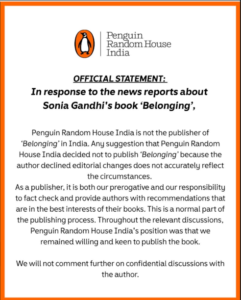
Penguin’s response has been carefully worded rather than combative. The publisher has denied that editorial disagreements were the reason for its withdrawal, instead describing fact-checking and manuscript recommendations as routine responsibilities that come with any publishing relationship. It has further clarified that it is not, in fact, the book’s Indian publisher at all, while declining to elaborate on what it called confidential discussions with the author. This measured, almost legalistic tone stands in contrast to the sharper political reactions from the Congress party, which has questioned how a global edition could proceed without the same reservations applying domestically.
The episode gains additional resonance when placed alongside an earlier controversy this year involving a different Penguin-commissioned project: the unpublished memoir of former Army Chief General M M Naravane. That manuscript, which reportedly touched on decision-making during India-China border tensions, became a flashpoint in Parliament when opposition leaders were restricted from referencing its contents on the floor of the House. Critics have drawn a line between the two incidents, suggesting a pattern in which sensitive material involving the government’s handling of national security or political rivals faces friction before reaching Indian readers, even when it proceeds smoothly abroad.
Also read: Delhi set for another Cockroach march on Sept 5 to compel govt to fulfil promises it made
What makes this dispute notable isn’t simply a publishing house’s editorial caution — that is common practice — but the optics created by the timing and subject matter. When a memoir by a prominent opposition figure runs into friction specifically over passages critical of the ruling establishment, it inevitably invites scrutiny beyond the publishing industry, raising questions about self-censorship in a market as commercially significant and politically sensitive as India’s.
Also read: Gangster Goldy Brar says in leaked tape he got Khalistan separatist Nijjar killed in Canada in 2023
Ultimately, the row underscores a recurring tension in Indian publishing: balancing global commercial interests with the domestic political climate. Whether the finished book eventually reaches Indian shelves through HarperCollins largely unaltered will likely determine how this controversy is remembered — as a routine editorial disagreement, or as a case study in the pressures shaping what political narratives get told, and how.