

Artificial intelligence is no longer a distant concept; it is here, embedded in how India works, hires, and grows. From automated customer support to AI-driven analytics, the technology is reshaping industries at a pace few anticipated. This has sparked a pressing debate: will AI replace jobs, or will it simply redefine them?
The answer, as with most transformations, is not black and white. India, with its vast and diverse workforce, sits at the centre of this transition. On one hand, AI is automating routine, repetitive tasks. Roles in data entry, basic customer service, and back-office processing are increasingly being handled by intelligent systems. Even sectors like manufacturing are seeing the rise of robotics and AI-powered quality control, reducing the need for manual intervention. 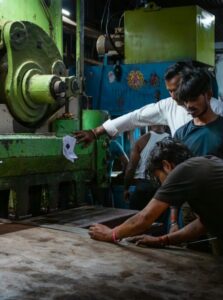
This shift naturally raises concerns. For a country where millions enter the workforce each year, job displacement is not just an economic issue, it is a social one. The fear is not merely about losing jobs, but about the speed at which roles could become obsolete, leaving workers struggling to adapt.
Yet, focusing only on displacement tells an incomplete story. AI is also creating entirely new categories of work. Roles such as data analysts, AI trainers, prompt engineers, and cybersecurity specialists are in growing demand. Companies like Infosys and Tata Consultancy Services are investing heavily in upskilling their workforce, recognizing that the future lies in collaboration between humans and machines, not competition.
The real shift is in the nature of jobs. Tasks that are predictable and rule-based are being automated, while roles requiring creativity, critical thinking, and emotional intelligence are gaining importance. For instance, in healthcare, AI can assist in diagnostics, but doctors are still essential for patient care and decision-making. In education, AI can personalize learning, but teachers remain central to mentorship and guidance.
 This evolution is redefining what it means to be “employable.” Skills are becoming more important than degrees. Continuous learning is no longer optional—it is essential. Initiatives like Skill India are attempting to bridge this gap by focusing on vocational training and digital skills. However, the scale of the challenge is immense. Upskilling millions of workers in a short span of time requires coordinated efforts from government, industry, and educational institutions.
Another dimension of this dilemma is inequality. High-skilled workers are more likely to benefit from AI, while low-skilled workers face a higher risk of displacement. This could widen income gaps if not addressed proactively. Ensuring inclusive growth in an AI-driven economy will require targeted policies, social safety nets, and accessible training programs.
There is also a cultural shift underway. The idea of a single, lifelong career is fading. The future workforce is likely to be more dynamic, with individuals moving across roles, industries, and even multiple careers over time. Flexibility, adaptability, and resilience are becoming as important as technical skills.
So, will AI replace jobs or redefine them? In India’s case, it is doing both, but with a stronger tilt toward redefinition. Jobs as we know them are evolving. Some will disappear, many will change, and new ones will emerge. The real challenge is not the technology itself, but how prepared the workforce is to adapt to it. 
India has a unique opportunity. With its young population and growing digital ecosystem, it can turn this disruption into an advantage, if it invests in skills, education, and inclusive policies. Because in the age of AI, the future of work will not be decided by machines alone. It will be shaped by how humans choose to work alongside them.