


The world of chess has been shaken by a landmark decision from the FIDE Ethics & Disciplinary Commission (EDC), which has imposed disciplinary sanctions on former World Chess Champion Vladimir Kramnik. Once celebrated as one of the finest strategic minds the game has ever produced, the Russian Grandmaster now finds himself at the centre of one of the most significant ethics rulings in recent chess history.
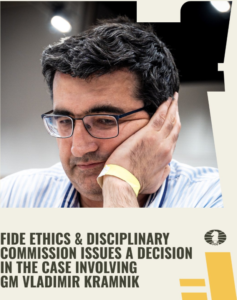 Following an extensive review, the EDC found Kramnik responsible for multiple violations of the FIDE Ethics Code and Disciplinary Code. According to the Commission’s findings, his conduct breached provisions relating to the right to dignity and respectful treatment, safeguarding the dignity of individuals, bullying and cyberbullying, psychological abuse, responsibility as a role model, failure to cooperate with the Fair Play Commission’s investigation, and making false or unjustified public accusations.
As a result, the Commission imposed a two-year worldwide ban prohibiting Kramnik from participating in FIDE-rated chess competitions or serving in any official chess capacity. However, the final 12 months of the sanction have been suspended for a probationary period of three years. In practical terms, this means Kramnik will serve an active one-year suspension, provided he commits no further violations during the probation period. Additionally, he has been directed to undertake 12 months of unpaid service for the benefit of the chess community as a supplementary sanction.
For many in the chess fraternity, the ruling marks a defining moment in the sport’s evolving approach to ethics and accountability. While chess is traditionally viewed as a contest of intellect and discipline, the decision reinforces the principle that behaviour beyond the board carries equal significance.
Kramnik’s achievements remain among the most distinguished in chess history. In 2000, he defeated Garry Kasparov to become World Champion, earning widespread admiration for his exceptional positional play, meticulous preparation, and profound understanding of the game. His contributions helped shape an entire generation of players and elevated modern chess to new strategic heights.
Yet in recent years, Kramnik’s increasingly public allegations concerning suspected cheating in online chess generated widespread controversy. While concerns about fair play remain an important issue for the sport, the Commission concluded that aspects of his conduct crossed ethical boundaries established to protect the dignity and well-being of others.
The ruling serves as a reminder that sporting excellence is measured not only by victories and titles but also by character and responsibility. In an era where public statements can rapidly influence reputations across the globe, governing bodies are placing greater emphasis on respectful conduct, especially from individuals regarded as role models.
The sanctions imposed on Kramnik are therefore about more than one individual. They reflect FIDE’s broader commitment to fostering a culture of integrity, respect, and accountability within international chess. As the game continues to grow in popularity and digital engagement, maintaining those values has become increasingly important.
For Vladimir Kramnik, the decision represents an extraordinary turn in a career once defined solely by brilliance on the chessboard. Whether this chapter ultimately becomes a period of reflection and redemption remains to be seen, but it undoubtedly stands as a powerful reminder that even legends are expected to uphold the values of the sport they helped define.