



It was an ordinary school morning.
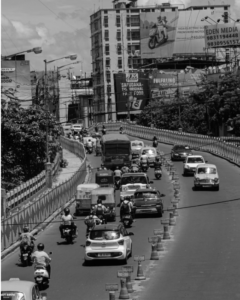
A little boy sat quietly in the back seat as his father drove him through the city’s busy streets. They were running a little late. Traffic was heavy, horns blared from every direction, and everyone seemed to be in a hurry. As they approached a traffic signal, another car accidentally brushed against theirs. It was barely a scratch.
But within seconds, both drivers jumped out of their vehicles. Angry words turned into shouting. Hands were raised. People gathered. The little boy watched silently through the window as the adults he looked up to lost all control over a moment that should have ended with a simple apology.
When he reached school, his teacher noticed something was different. He was unusually quiet. During art class, instead of drawing the trees and sunshine he usually loved, he sketched two angry men standing beside damaged cars. At lunch, he told his friend, “My dad almost fought someone today.” The accident had lasted barely five minutes. The memory would stay with him much longer.
Every morning, our newspapers carry another disturbing story of road rage—a minor collision escalating into violence, a disagreement ending in assault, sometimes even death. We shake our heads and wonder, What is happening to people? Yet, perhaps the more important question is this: How do people learn that anger is the first response to conflict? As a Mind Wellness Coach, I have often reflected on this question. Stress, financial pressures, endless deadlines and the pace of modern life certainly make tempers shorter. But I believe the seeds of aggression are often planted much earlier, in moments so ordinary that we hardly notice them. Think back to a toddler taking their first uncertain steps. The child stumbles and bumps into a chair. Almost instinctively, an adult smiles and says, “Oh! The naughty chair hit you? Hit it back!” The little one obediently pats or hits the chair. Everyone laughs. The tears disappear. It seems harmless. Perhaps it is. But perhaps, without meaning to, we have also introduced a powerful idea, that whenever something hurts us, the natural response is to hit back.
Imagine if we changed that conversation. Instead of encouraging retaliation, we could pick the child up with a smile and say, “That must have hurt. You’re okay now. Let’s be a little careful next time.” Or perhaps gently pat the chair together and move on. The lesson is subtle but profound. Pain does not always need revenge. Disappointment does not always need anger. Conflict does not always need a winner and a loser.
Children are extraordinary observers. They notice far more than we realise. They watch how we speak to domestic staff, how we respond when someone cuts us off in traffic, how we treat waiters in restaurants, how we disagree with our spouses, and how we react when life doesn’t go our way. Long before they hold a steering wheel, they are learning how adults handle frustration.
 This is not about raising children who remain silent in the face of injustice or never stand up for themselves. Courage and self-respect are essential. But there is a profound difference between asserting ourselves and reacting with uncontrolled aggression. Every calm response, every sincere apology, every moment of patience becomes a lesson our children quietly carry into adulthood.
If we truly dream of safer roads, perhaps we must begin somewhere far removed from traffic signals and driving lessons. We must begin at home. Around our dining tables. In our conversations. n the examples we set every single day. Because road rage rarely begins behind the wheel. It begins in the beliefs we carry there.
And somewhere, in the back seat of a car today, another little child is watching, and learning.