



When I left India with Bharatanatyam, I thought I was taking a classical dance form to new audiences. I was wrong. I was carrying a civilisation.
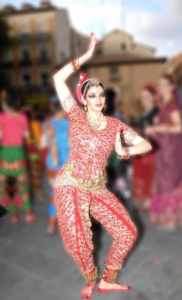 Over the years, I realised that my greatest challenge was never language or geography. It was perception. Too often, India is viewed through one of two lenses. There is India Exotica, a land of mysticism, colourful costumes and spectacle. Then there is India Idiotica, a country reduced to poverty, chaos and contradiction. Between these two caricatures, the intellectual, philosophical and artistic brilliance of India is frequently overlooked. That is when Bharatanatyam stopped being merely my profession. It became my movement, my protest and my poetry.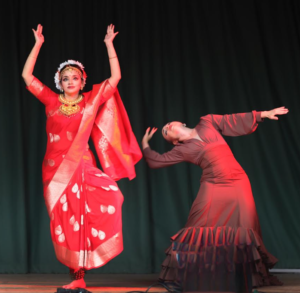
Whether I have been performing in New York, Madrid, across Spain, Germany, Belgium, Croatia, Austria and the United Kingdom, teaching university students in Colombia and Russia, collaborating with Flamenco artists in Dubai and Abu Dhabi, or working today with neurodivergent communities in Austria, I have discovered the same truth. People are not searching for the exotic. They are searching for meaning.
My mission has never been to export Indian culture. It has been to create conversations. Through dance operas on Shakti in museums such as Madrid’s National Anthropological Museum, the Ashmolean Museum in Oxford and the Museo del Traje, as well as performances in churches, libraries and universities across the world, I have watched audiences discover that Bharatanatyam is not simply entertainment. It is philosophy in motion. It asks questions about identity, courage, compassion and what it means to be human.
At the heart of my work has been introducing Shiva not merely as a deity, but as a philosophy. Shiva’s cosmic dance upon Apasmara, the dwarf of ignorance, is one of humanity’s most powerful metaphors. Every age has its own Apasmara. Prejudice, discrimination, racism, intolerance and fear. The dance reminds us that the greatest victory is not over one another but over our own ignorance. It reminds us that the world is one family.
The same philosophy guides my understanding of Shakti, not as mythology confined to the past but as a timeless expression of resilience, feminine strength and transformation.
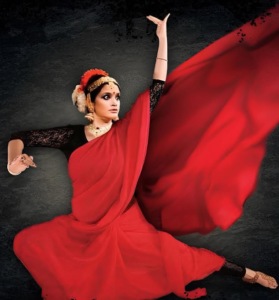 Perhaps the most moving moments have come when my students from Spain, France, Iraq and Jamaica , Bulgaria ,have travelled to India to perform Bharatanatyam. In those moments, I could prove that culture is not weakened when it crosses borders. It is strengthened. Heritage is not something we own. It is something we share.
Bharatanatyam has also taught me to reject another prejudice. Ageism. In this tradition, an artist does not become less relevant with age. Experience deepens expression. Wisdom enriches performance. Some of its greatest exponents have continued dancing into their seventies and eighties, reminding us that artistry matures rather than fades.
I am, unapologetically, an idealist. I believe art can succeed where politics often struggles. It can build trust where there is suspicion, empathy where there is division and dialogue where there is silence. That is why Bharatanatyam is no longer simply the dance I perform. It is how I choose to see the world.
Not through borders but through bridges. Not through stereotypes but through understanding. Not through difference but through our shared humanity. Perhaps that is the greatest choreography of all.