



Srirangam is an independent, cozy, atmospheric villa-style homestay, cradled in nature, with well-appointed ensuite bedrooms offering a refined, earthy and tranquil hospitality experience. Located within the buffer zone of the UNESCO World Heritage Site of Shantiniketan, Srirangam is a contemporary homage to the cultural landscape shaped by Rabindranath Tagore and the institution he founded, Visva-Bharati. More than a homestay, it is an exploration of the place, making an attempt to engage with the humanist, artistic and ecological ideals that continue to define Shantiniketan’s enduring legacy.
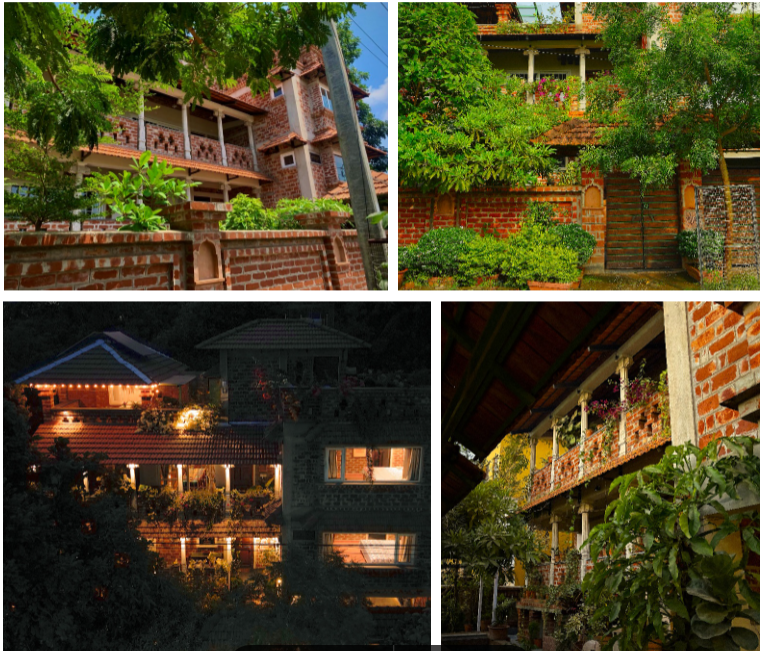
Built primarily as a second family home, the 4,500-square-foot villa brings together architectural influences from different regions of India while remaining deeply anchored in the cultural and environmental context of Bengal. Its design reflects the belief that architecture can be both rooted and cosmopolitan, drawing from diverse traditions without losing its sense of place.
Constructed in exposed brick, Srirangam appears to emerge organically from the red lateritic earth that characterizes the landscape of Shantiniketan. Rather than standing apart from its surroundings, the building seeks to become an extension of it. The rich material palette allows it to sit comfortably within the region’s distinctive visual vocabulary.
Its setting reinforces this connection to the landscape. With the expansive grounds of Visva-Bharati stretching before it and the wooded precincts of the Eastern Zonal Cultural Centre at its rear, Srirangam is positioned to take maximum advantage of the borrowed landscape. Every room opens onto views of greenery, dissolving the boundaries between architecture and nature and creating a continuous relationship with the surrounding environment.
Several architectural elements draw inspiration from southern India. Twin verandahs framing the front elevation are lined with hand-carved stone pillars from Tamil Nadu, recalling the colonnades of the region’s temple architecture. Terracotta-tiled pitched roofs evoke the Nalukettu and Tharavadu traditions of Kerala, while a U-shaped amphitheater embracing a lily pool references the social geometry of India’s historic stepwells.
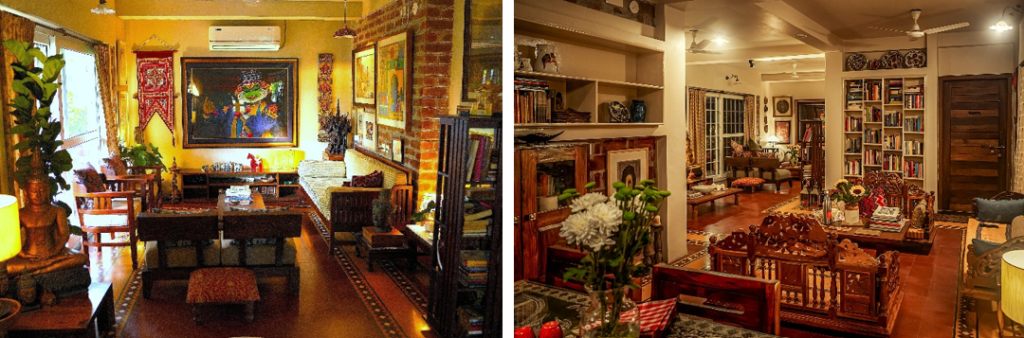
The floors are laid with handmade cement tiles produced by Bharat Flooring in Mumbai using traditional Athangudi techniques. Their textures and craftsmanship recall the celebrated interiors of Chettinad mansions, adding another layer of regional memory to the architectural composition.
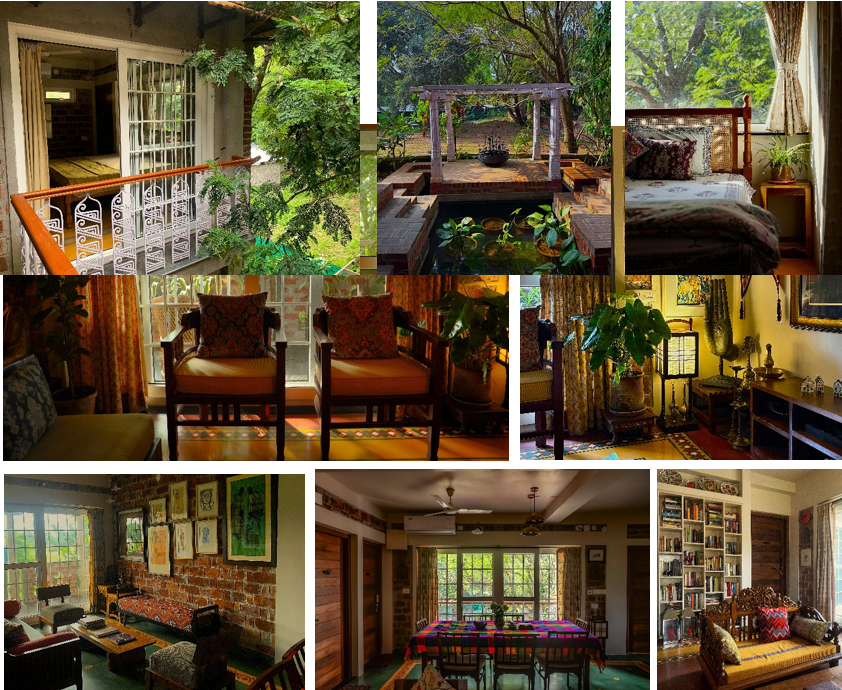 Yet Srirangam’s identity is not defined by southern influences alone. Iron railings ornamented with alpana-inspired paisley motifs introduce a distinctly Shantiniketan sensibility. Drawing inspiration from the artistic traditions associated with Kala Bhavana, these details help weave the building’s diverse references into a coherent whole.
In this respect, Srirangam can be understood as a contemporary interpretation of the eclectic yet remarkably integrated architectural language that emerged in early Shantiniketan under the guidance of Rabindranath Tagore and the pioneering architect Surendranath Kar. Like many historic buildings on the campus, it seeks to synthesize multiple influences while remaining responsive to climate, landscape and local culture.
Environmental performance was a central consideration throughout the design process. Wide verandahs and deep roof overhangs provide shade and contribute significantly to thermal comfort. Rat-trap bond masonry improves insulation, helping maintain indoor temperatures that are typically three to four degrees Celsius cooler than conventional construction during Bengal’s summers. Complementing these passive strategies, rooftop solar panels generate approximately sixty percent of the property’s energy requirements.
Srirangam’s 1,400-square-foot basement houses the Srinidhi Art Gallery, a naturally lit cultural space that hosts exhibitions, performances and conversations throughout the year. Guests are often invited to participate in these events, extending the experience beyond hospitality into artistic engagement. The name Srirangam derives from Sanskrit: Sri signifying beauty, wellbeing and abundance, and Rangam denoting a space or arena. The name reflects the aspiration that underpins the project – to create a place where architecture, landscape, art and community come together
Accommodation: Srirangam offers six thoughtfully appointed, ensuite, airconditioned guest rooms:
- Aadi: 12 / 13 feet
- Ananta: 12 / 13 feet
- Adwaita: 10 / 12 feet
- Anagh: 14 / 14 feet
- Aaditya: 14 / 14 feet
- Apoorva (roof top studio): 20 / 12 feet.
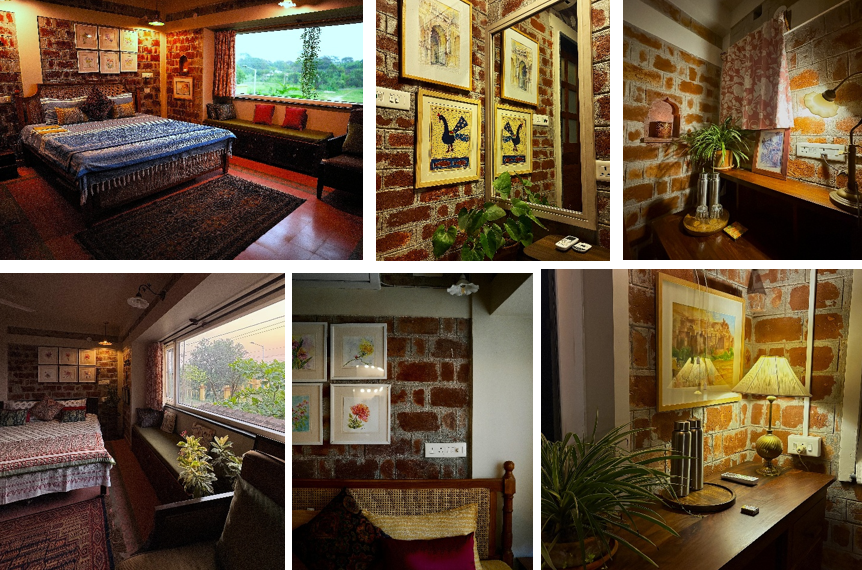
A sixth room, Aananda, located on the ground floor, is occasionally offered to elderly guests or those with mobility considerations. Each room includes curated artworks, reading desks, bay windows, organic bath amenities, and rain showers, with segregated wet and dry areas in the ensuite bathrooms.
Meals:
Breakfast is included in the tariff. Delicious, wholesome home-cooked dinners are available on prior request and are charged separately. Lunch is generally not served; however, exceptions may be made for elderly guests or those with mobility challenges. Supported by a dedicated team of six trained staff members, Srirangam combines attentive service with genuine warmth to create a comfortable and memorable experience for its guests.
Location and Accessibility: Srirangam is located beside Srijani Shilpagram (Eastern Zonal Cultural Centre), within the buffer zone of the UNESCO World Heritage Site of Shantiniketan, and less than 2 kilometres from the historic Ashram core (Uttarayan Complex and Kala Bhavan).
Nearest railway station: Bolpur Shantiniketan Railway Station (approx. 4.5 km)
Nearest airport: Kazi Nazrul Islam Airport, Durgapur (approx. 70 km)
By road from Kolkata: 3.5 hours
Srirangam is especially suited for:
- Cultural travelers • Visiting Academics • Artists and Writers • Wellness retreat guests • Heritage tourism delegates • Slow travel enthusiasts.
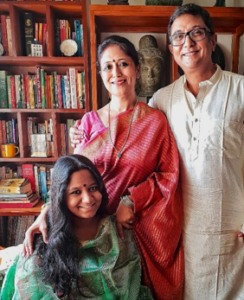
The owners: Srirangam is owned by: Shumon Sengupta, an international humanitarian and development professional, with over three decades of experience across Africa and Asia; Ananya Banerjee Sengupta, a self-taught watercolor artist; and their daughter Madhura Sen, who lives in the UK. The family’s relationship with Shantiniketan spans generations and reflects openness, artistic curiosity, warmth and quiet reflection. According to the Sens, “Our homestay embodies the time-honoured Indian ethos of Atithi Devo Bhava, i.e. ‘Guest is god’. True to our tagline (borrowed from Tagore), our ethos and our name, we look forward to welcoming you as an honoured guest – the true and beautiful one – to spend a few days at Srirangam, the realm of beauty, bliss, and wellbeing.”
Send your comments on this article to editor@newsdare.com.
