

On 5 February 2026, Indian educator and social activist Rouble Nagi was awarded the prestigious $1 million GEMS Education Global Teacher Prize 2026 at the World Governments Summit in Dubai, honouring her extraordinary work of transforming India’s slums into vibrant classrooms and bringing education to more than one million children.
In India’s densely populated urban settlements, education often remains a distant dream for thousands of children. Poverty, unsafe surroundings, child labour, and limited access to schools create barriers that classrooms alone cannot overcome. Yet, one remarkable initiative is proving that learning does not always begin inside four walls—it can begin on them.
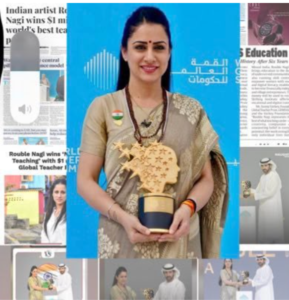 Artist, social innovator, and education changemaker Rouble Nagi, recipient of the Global Teacher Prize 2026, has transformed neglected walls into vibrant learning spaces through the Rouble Nagi Art Foundation (RNAF). Her initiative, Misaal Mumbai, demonstrates how public art can become a powerful tool for education, dignity, and community transformation.
Also read: Ask Career Guru: How do I start building my personal brand in this digital age?
Instead of seeing blank walls as forgotten spaces, the foundation turns them into colourful “Living Walls of Learning.” Painted with alphabets, numbers, animals, maps, and nature, these murals encourage children to learn while playing and exploring. The approach is particularly effective in neighbourhoods where preschool education is scarce, offering young minds their first exposure to literacy in a joyful and accessible way. But the transformation extends far beyond paint.
RNAF combines educational murals with environmental improvement by cleaning neighbourhoods, waterproofing buildings, beautifying public spaces, and encouraging community ownership. When surroundings become cleaner and more attractive, residents often develop renewed pride in their communities, creating a positive cycle of care and participation.
The foundation also recognises that lasting educational change begins at home. Through sewing centres, computer training, and livelihood programmes, mothers gain financial independence and confidence. Empowered parents are more likely to prioritise their children’s education, helping to break the cycle of poverty that has trapped generations. 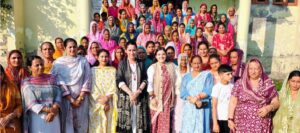
The results are reflected not only in improved learning but in changing aspirations. Children who once believed education was beyond their reach begin dreaming of careers, while families discover hope where resignation once prevailed. Confidence replaces fear, and opportunity begins to feel attainable.
Research supports this holistic approach. Studies in educational psychology consistently show that visually stimulating learning environments improve memory, attention, and cognitive development. UNESCO has also highlighted the importance of community participation in strengthening educational outcomes, while parental involvement remains one of the strongest predictors of a child’s academic success.
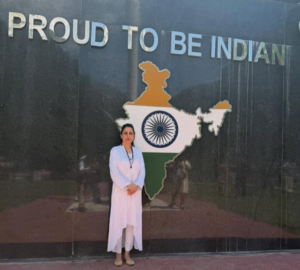 Rouble Nagi’s work reminds us that education is not merely about constructing schools; it is about creating environments where learning naturally flourishes. Sometimes, the first lesson begins with a brushstroke, proving that when communities come together with imagination and purpose, even the most ordinary wall can become the doorway to a brighter future.
For every child, education should not be a privilege—it should be an invitation written boldly on the walls of hope.